Linggo, Marso 12, 2017

Literature Delights: Quezon

Quezon: Brief History

Resulta ng larawan para sa quezon
Map of Quezon


Resulta ng larawan para sa quezon
Quezon Provincial Capitol
Quezon (Tagalog pronunciation: [ˈkɛson]) is a province of the Philippines in the Calabarzon region of Luzon island. The province was named after Manuel L. Quezon, the second President of the Philippines, and its capital is Lucena City.

As the last province of the CALABARZON Region, Quezon is not the least in terms of literature. It definitely owns its own face in the field of literature, jointly built by its writers.

Writers

Horacio de la Costa

Resulta ng larawan para sa horacio de la costa
Horacio de la Costa
Horacio de la Costa (May 9, 1916 – March 20, 1977) was the first Filipino Provincial Superior of the Society of Jesus in the Philippines, and a recognized authority in Philippine and Asian culture and history.

De la Costa was the author of a number of books, particularly on Philippine culture and history, which revealed his nationalistic bent, among which are:

The Jesuits in the Philippines, 1581–1768

The Trial of Dr. Rizal, an edited translation of W.E. Retana’s transcription of the official Spanish documents

Recent Oriental History

Readings in Philippines History

The Background of Nationalism, and Other Essays

Asia and the Philippines

He also contributed numerous articles on these subjects to various local and foreign scholarly publications, such as Philippine Social Sciences and Humanities Review, Bulletin of the Philippine Historical Association, Hispanic American Historical Review, Comment, Science Review, Theological Studies, and Philippine Studies. The Catholic Encyclopedia carries his article on the Philippines.

In 1965, he was presented the Republic Heritage Award by the then Philippine President Diosdado Macapagal for his historical writings. In 1971 he became General Assistant to the Superior General of the Society of Jesus, Pedro Arrupe, in Rome.

Fr. de le Costa was one of the founding members of the Philippine Academy of Science and Humanities, as well as the International Association of Historians of Asia. He was also a member of the National Research Council of the Philippines, Philippine Bibliographical Society, Philippine Historical Association and the National Historical Society of the National Historical Commission.

Paz Marquez-Benitez

Resulta ng larawan para sa paz marquez benitez
Paz Marquez-Benitez
Paz Márquez-Benítez (1894–1983) was a Filipina short-story writer.


Orlando Nadres

Orlando Nadres (born November 1938 in Tayabas, Quezon - died July 14, 1991) was a stage, film, television writer, director and actor.

Nadres first wrote professionally for Komiks, together with Mars Ravalo doing layouts and writing stories for the publication and in 1968 became the managing editor of the same publication. In the 1960s, he worked for G. Miranda and Sons Publishing Co. which later inspired him to write Paraisong Parisukat. Later he became the editor of “Sixteen Magazine” the job which introduced him to the world of Film. He became involved in theater because of his involvement with the infamous Lino Brocka, who introduced him to PETA.

After Martial Law was declared, he helped sustain PETA, as an actor, playwright and Trainer in CITASA.

In the late 1980s, when he decided to stay in his hometown Tayabas, Nadres formed the theater group SUSI (Sanayan at Ugnayan sa Sining), which revived the traditional performances of Carillo, Santacruzan and Sarswela.


Literature Delights: Rizal

Rizal: Brief History

Resulta ng larawan para sa rizal province
Rizal Map

Rizal Provincial Capitol

Rizal, officially known as the Province of Rizal (Filipino: Lalawigan ng Rizal) is a province in the Philippines located in the CALABARZON region, just 16 kilometres (9.9 mi) east of Manila. The province is named after José Rizal, one of the main national heroes of the Philippines. Rizal is bordered by Metro Manila to the west, Bulacan to the north, Quezon to the east and Laguna to the southeast. The province also lies on the northern shores of Laguna de Bay, the largest lake in the country. Rizal is a mountainous province perched on the western slopes of the southern portion of the Sierra Madre mountain range.

Named after the national hero Jose Rizal, the province's literature are designed by its own unique culture molded by its writers.

Writers

Ligaya Tiamson-Rubin

Resulta ng larawan para sa ligaya tiamson rubin
Ligaya Tiamson-Rubin

Ligaya G. Tiamson-Rubin (popularly known as 'Mam Gaying'), is a multiple Carlos Palanca Memorial Awards for Literature recipient, and currently a professor of the University of the Philippines Diliman. Today, she is teaching Filipino 25, Mga Ideya at Estilo (Ideas and Styles) under the Department of Filipino and Philippine Literature [1] at the College of Arts and Letters, University of the Philippines Diliman in Diliman, Quezon City.

Published Works

Biography:

Angono, Rizal 4 : Sa Mata ng mga Iskolar ng Bayan (In the Eyes of Nation's Scholars)

Angono, Rizal 5 : Persona at Pamumuhay (Persons and Living)

History:

Angono, Rizal 3 : Mga Talang Wika at Pangkasaysayan (Language and Historical Writings)

Literature:
Paano Nagsusulat ang Isang Ina? (How a Mother Write a Poem?)— 1981 Carlos Palanca Memorial Awards for Literature Third Place

Turning Back and Moving Back— 1980 Carlos Palanca Memorial Awards for Literature Third Place
Persona (Person)

Sagradong Abo (Sacred Ashes)

Reference books:

Angono, Rizal 1 : Art Capital ng Pilipinas (Philippine Art Capital)

Angono, Rizal 2 : Bukal ng Sining (Fountain of Art)

Jose Antonio Vargas


Resulta ng larawan para sa jose antonio vargas
Jose Antonio Vargas
Jose Antonio Vargas (born February 3, 1981) is a journalist, filmmaker, and immigration rights activist. Born in the Philippines and raised in the United States from the age of twelve, he was part of The Washington Post team that won the Pulitzer Prize for Breaking News Reporting in 2008 for coverage of the Virginia Tech shooting online and in print.[2] Vargas also has worked for the San Francisco Chronicle, the Philadelphia Daily News, and The Huffington Post.[3] He wrote, produced, and directed the autobiographical 2013 film, Documented, which CNN Films broadcast in June 2014.


Literature Delights: Batangas

Batangas: Brief History

Resulta ng larawan para sa batangas
Batangas Map

Resulta ng larawan para sa batangas
Taal Volcano
Batangas, officially known as the Province of Batangas (Filipino: Lalawigan ng Batangas) is a province in the Philippines located in the Calabarzon region in Luzon. Its capital is the city of Batangas and is bordered by the provinces of Cavite and Laguna to the north and Quezon to the east. Across the Verde Island Passages to the south is the island of Mindoro and to the west lies the South China Sea. Poetically, Batangas is often referred to by its ancient name Kumintáng.

The first recorded name of the province was Kumintáng, whose political center was the present-day municipality (town) of Balayan. Balayan was considered the most progressive town of the region. An eruption of Taal Volcano destroyed a significant portion of the town, causing residents to transfer to Bonbon (now Taal), the name eventually encompassing the bounds of the modern province.

The term Batangan means a raft which the people used so that they could fish in the nearby Taal Lake. It also meant the numerous logs found in the Calumpang River, the body of water that runs through the northeastern portion of the town and assumes the shape of a tuning fork.

Like the other provinces in CALABARZON, Batangas has also its own style of literature. Its batangueno writers build the face of the province in the field of literature.

Writers

Teodoro Agoncillo

Resulta ng larawan para sa teodoro agoncillo
Teodoro Agoncillo
Teodoro Andal Agoncillo (November 9, 1912 – January 14, 1985) was a 20th-century Filipino historian. He and his contemporary Renato Constantino were among the first Filipino historians renowned for promoting a distinctly nationalist point of view of Filipino history (nationalist historiography). He was also an essayist and a poet.

Works

The Revolt of the Masses: The Story of Bonifacio and the Tyrone - (mainly a biography of Andres Bonifacio, 1956)

Malolos: The Crisis of the Republic - (sequel to Revolt of the Masses which discusses the events from Biak-na-Bato to the end of the Philippine–American War, 1960)

The Fateful Years: Japan's Adventure in the Philippines - (Philippine history during World War II, two volumes, 1965)

History of the Filipino People - (eight editions: 1960, 1967, 1970, 1973, 1977, 1984, 1986, 1990)


Claro M. Recto

Claro M Recto.jpg
Claro M. Recto
Claro Mayo Recto Jr. (born Claro Recto y Mayo; February 8, 1890 – October 2, 1960) was a Filipino statesman, jurist, poet and one of the foremost statesmen of his generation. He is remembered for his nationalism, for "the impact of his patriotic convictions on modern political thought".[2][3]

Poet, Playwright, Essayist

He was reared and schooled in the Spanish language, his mother tongue alongside Tagalog, and he was also fluent in English. He initially gained fame as a poet while a student at University of Santo Tomás when he published a book Bajo los Cocoteros (Under the Coconut Trees, 1911), a collection of his poems in Spanish. A staff writer of El Ideal and La Vanguardia, he wrote a daily column, Primeras Cuartillas (First Sheets), under the nom de plume "Aristeo Hilario." They were prose and numerous poems of satirical pieces. Some of his works still grace classic poetry anthologies of the Hispanic world.

Among the plays he authored were La Ruta de Damasco (The Route to Damascus, 1918), and Solo entre las sombras (Alone among the Shadows, 1917), lauded not only in the Philippines, but also in Spain and Latin America. Both were produced and staged in Manila to critical acclaim in the mid 1950s.

In 1929, his article Monroismo asiático (Asiatic Monroism) validated his repute as a political satirist. In what was claimed as a commendable study in polemics, he proferred his arguments and defenses in a debate with Dean Máximo Kálaw of the University of the Philippines where Kálaw championed a version of the Monroe Doctrine with its application to the Asian continent, while Recto took the opposing side. The original Monroe doctrine (1823) was U.S. President James Monroe's foreign policy of keeping the Americas off-limits to the influence of the Old World, and states that the United States, Mexico, and countries in South and Central America were no longer open to European colonization. Recto was passionately against its implementation in Asia, wary of Japan's preeminence and its aggressive stance towards its neighbors. In his deliberation, he wrote about foreseeing the danger Japan posed to the Philippines and other Asian countries. His words proved prophetic when Japan invaded and colonized the region, including the Philippines from 1942-45.

His eloquence and facility with the Spanish language were recognized throughout the Hispanic world. The Enciclopedia Universal says of him: "Recto, more than a politician and lawyer, is a Spanish writer, and that among those of his race" (although he had Irish and Spanish ancestors), "there is not and there has been no one who has surpassed him in the mastery of the language of his country's former sovereign.

Speeches and Writings

A realistic economic policy for the Philippines. Speech delivered at the Philippine Columbian Association, September 26, 1956. ISBN B0007KCFEM

On the Formosa Question, 1955 ISBN B0007JI5DI

United States-Philippine Relations, 1935-1960. Alicia Benitez, ed. University of Hawaii, 1964.

Three years of enemy occupation: The issue of political collaboration in the Philippines. Filipiniana series, 1985 Filipiana reprint. ISBN B0007K1JRG

Our trade relations with the United States, 1954 ISBN B0007K8LS6

The evil of religious test in a democracy, 1960 ISBN B0007K4Y8W

Solo entre las sombres: Drama en un acto y en prosa, 1917; reprinted 1999 ISBN 971-555-306-0

Asiatic monroeism and other essays: Articles of debate, 1930 ISBN B0008A5354

The law of belligerent occupation and the effect of the change of sovereignty on the commonwealth treason law: With particular reference to the Japanese occupation of the Philippines, 1946

Our lingering colonial complex, a speech before the Baguio Press Association, 1951

The Quirino junket: an Objective Appraisal, 1949 ISBN B0007K4A7W

The Philippine survival: Nationalist essays by Claro M. Recto, 1982

Claro Recto on our Constitution, Constitutional Amendments and the Constitutional Convention of 1991

Our mendicant foreign policy, a speech at the commencement exercises, University of the Philippines, 1951

The Recto Valedictory, a collection of 10 never-delivered speeches, with English translations by Nick Joaquin, 1985

[1] [2] Vintage Recto: Memorable speeches and writings, edited by Renato Constantino, 1986

Recto Reader: Excerpts from the Speeches of Claro M. Recto. edited by Renato Constantino, 1965 ISBN B0006E72Z6

Bienvenido Lumbera

Resulta ng larawan para sa bienvenido lumbera
Bienvenido Lumbera
Bienvenido Lumbera is a Filipino poet, critic and dramatist. He is a National Artist of the Philippines and a recipient of the Ramon Magsaysay Award for Journalism, Literature and Creative Communications. He won numerous literary awards, including the National Book Awards from the National Book Foundation, and the Carlos Palanca Memorial Awards.

At the height of Martial Law, Lumbera had taken on other creative projects. He began writing librettos for musical theater. Initially, the Philippine Educational Theater Association (PETA) requested him to create a musical based on Carlos Bulosan’s America Is in the Heart. Eventually, Lumbera created several highly acclaimed musical dramas such as Tales of the Manuvu; Rama, Hari; Nasa Puso ang Amerika; Bayani; Noli me Tangere: The Musical; and Hibik at Himagsik Nina Victoria Laktaw. Sa Sariling Bayan: Apat na Dulang May Musika, an anthology of Lumbera's musical dramas, was published by De La Salle University-Manila Press in 2004. Lumbera authored numerous books, anthologies and textbooks such as: Revaluation; Pedagogy; Philippine Literature: A History and Anthology; Rediscovery: Essays in Philippine Life and Culture; Filipinos Writing: Philippine Literature from the Regions; and Paano Magbasa ng Panitikang Filipino: Mga Babasahing Pangkolehiyo.

Works

Poetry:

Ka Bel

The Yaya’s Lullaby

Servant

Sadness

Magic

Eulogy of Roaches


Literary criticism:

Revaluation: Essays on Literature, Cinema, and Popular Culture, 1984

Tagalog Poetry, 1570-1898: Tradition and Influences on Its Development, 1986

Abot-Tanaw: Sulyap at Suri sa Nagbabagong Kultura at Lipunan, 1987


Textbooks:

Pedagogy

Philippine Literature: A History and Anthology

Rediscovery: Essays in Philippine Life and Culture

Filipinos Writing: Philippine Literature from the Regions

Paano Magbasa ng Panitikang Filipino: Mga Babasahing Pangkolehiyo

Literature Delights: Laguna


Kaugnay na larawan
Map of Laguna


Laguna: Brief History

Resulta ng larawan para sa laguna photos
Laguna Coast
Laguna, officially known as the Province of Laguna (Filipino: Lalawigan ng Laguna ; Spanish: Provincia de La Laguna), is a province in the Philippines located in the Calabarzon region in Luzon. Its capital is Santa Cruz and the province is situated southeast of Metro Manila, south of the province of Rizal, west of Quezon, north of Batangas and east of Cavite. 

Laguna itself is one of the crowning seats of Philippine literature because it is the birtplace of the country's national hero: Jose Rizal, a novelist. In addition, Laguna's literature is made rich made by its very own writers.

Writers

Gerry Alanguilan

Resulta ng larawan para sa gerry alanguilan
Gerry Alanguilan
Doroteo Gerardo N. "Gerry" Alanguilan, Jr. (born January 20, 1968), better known in the Philippines by his stage name Komikero, is a Filipino comic book artist and writer from San Pablo, Laguna, best known for his graphic novels Wasted and Elmer.

As a young man, Alanguilan studied to become an architect, but decided to turn his hobby of comic book illustration into a career in order to be with his then-girlfriend. At first, much of Alanguilan's work in comic was on conventional American superhero titles. His first self-written comic was Wasted. Alanguilan at first intended the comic to be for himself and his friends to read, and was embarrassed by the large amounts of violence and profanity in the title. Eventually Alanguilan allowed Wasted to be published in the Philippines, and from there its popularity spread to the United States and put Alanguilan on the independent comics map.[2]

After Wasted, Alanguilan created several other titles which were published in several Filipino publications, such as Johnny Balbona, Humanis Rex!, ELMER, Timawa and Where Bold Stars go to Die. He also contributed to anthologies like Siglo: Freedom, Siglo: Passion and Filipino Komiks, all published in the Philippines. His self-created titles have also attracted a fanbase all over the world, including comic creators Neil Gaiman[3] and Warren Ellis.[4]

In the United States, he is known as an inker for such titles like Wetworks, X-Men, Superman: Birthright, Wolverine, High Roads, Fantastic Four, and Silent Dragon. He has also worked alongside fellow Filipino comic book creators Leinil Francis Yu and Whilce Portacio.

Alanguilan cites Barry Windsor-Smith, Alfredo Alcala, Frank Miller, Katsuhiro Otomo[5] and Alan Moore as creative influences, in particular Moore's reinterpretation of Marvelman.[6] Many of Alanguilan's titles take place in his native Philippines, or feature Filipino characters, such as Johnny Balbona, Humanis Rex!, and Timawa. Many of Alanguilan's graphic novels incorporate elements of social commentary, especially Elmer, which satirizes racism.

In 2007, Alanguilan created an autobiographical slice-of-life webcomic called Crest Hut Butt Shop, based on an earlier minicomic of the same name. However, the webcomic has not been updated since September 12, 2007. Alanguilan played the antagonist, a human trafficker, in Tin-Tin 15, a short film created to increase awareness of child trafficking in the Philippines. The protagonist of Whilce Portacio and Brian Haberlin's comic series Stone, Gerry Alan, is named for Alanguilan.

After a long sabbatical from mainstream comics, Alanguilan, partnered again with Leinil Yu in 2012 to help Mark Millar bring Supercrooks to success

Awards

2011

Winner (For Elmer) Quai des Bulles – Ouest France 2011, St. Malo, France
Winner, Best Asian Album (For Elmer), Prix-Asie ACBD, France 2011
Nominee, Best New Album (For Elmer), Will Eisner Industry Awards, USA, 2011
Global Pinoy Awardee, SM Calamba, 2011

2010

Gawad Pinakamaningnining na Alagad ng Sining (Visual Arts), 2010
Outstanding San Pableño for Visual Arts, 2010


Denny R.

Resulta ng larawan para sa haveyouseenthisgirl
Denny R. (HaveYouSeenThisGirl)
Well, Laguna writers don't conquer the traditional expression of literature only. It even enters the modern technology of producing literary texts.

Denny R. (born 11 February 1994, San Pablo City, Laguna, Philippines), commonly known by her pseudonym HaveYouSeenThisGirL, is a Filipino author.[4] She is best known for her novel, Diary ng Panget. It first appeared on Wattpad[5] and was later published as a paperback by PSICOM Publishing Inc.[6] A film adaptation of her work was released in April 2014.[7]

Denny began writing stories at the age of 13.[8] Her book, Diary ng Panget (Diary of an Ugly) has been a commercial success[9] and widely followed in Wattpad.[10] The book has been adapted into a film. She also wrote She Died, a manga series that also has been published on Wattpad. Her other works include Voiceless, that became popular because of the book's theme song "Hear Me", Waiting for the Train (under the GOLD Manga Series), Steps to You, That Girl, One Bad Move, I Met A Jerk Whose Name Is Seven and 10 Signatures To Bargain With God.

Jose Rizal

Resulta ng larawan para sa jose rizal
Jose Rizal
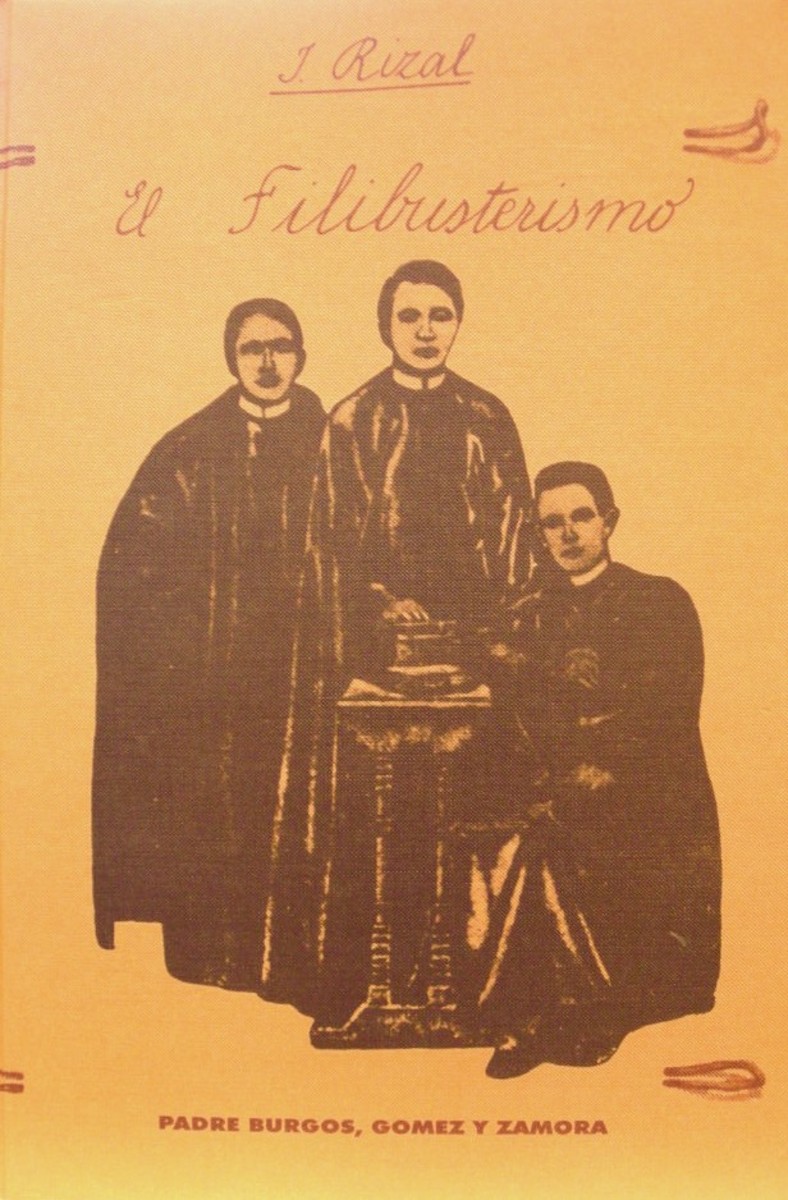
And here, this one of the writers in Laguna is considered as the peak of Laguna Literature, as well as in the Philippine Literature. Aside from the national hero, Rizal is a great novelist, known for his two novels, Noli Me Tangere and El Filibusterismo, which illustrates the condition of the Filipinos during the Spanish Regime, Though these two novels contains violent messages and ideas, it still garnered the hearts of the Filipino people.
Resulta ng larawan para sa calamba laguna
Rizal Shrine, Calambal Laguna
Resulta ng larawan para sa noli me tangere
Noli Me Tangere by Rizal
Resulta ng larawan para sa el filibusterismo original cover
El Filibusterismo by Rizal

Literature Delights: Cavite

Literature: Brief History

Resulta ng larawan para sa cavite photos
Map of Cavite

The province of Cavite is located on the southern shores of Manila Bay in the Calabarzon region on Luzon island. Situated just 21 kilometers (13 mi) south of the capital, it is one of the most industrialized and fastest growing provinces because of its close proximity to Metro Manila. With a population of 3,678,301 in 2015, it is the most populated province in the country.
For over 300 years, the province has been known as the "Historical Capital of the Philippines" and was the cradle of the Philippine Revolution, the renouncement of Spanish colonial control, which culminated in the Philippine Declaration of Independence on June 12, 1898 in Kawit, Cavite. The name "Cavite" comes from the Hispanicized form of kawit or it may be a corruption of kalawit, Tagalog words for "hook", in reference to the small hook-shaped peninsula jutting out to Manila Bay.[21] The name originally applied to the peninsula, Cavite La Punta (now Cavite City) and the adjacent lowland coastal area of Cavite Viejo (now Kawit).
Another theory proposes that the name is a Hispanicized form of kabit, Tagalog for "joined", "connected", or "attached", referring to the peninsula's topographical relation to the mainland.[21] Edmund Roberts, in his 1821 memoir, stated that the "natives" called it Caveit due to the "crooked point of land extending into the sea.

Writers


Cavite is rich in its own literature. In fact, it becomes the home of some well-known writers that made the name Cavite shine among others.


Alejandro G. Abadilla


G
Alejandro G. Abadilla (March 10, 1906 – August 26, 1969), commonly known as AGA, was a Filipino poet, essayist and fiction writer. Critic Pedro Ricarte referred to Abadilla as the father of modern Philippine poetry, and was known for challenging established forms and literature's "excessive romanticism and emphasis on rhyme and meter".[1] Abadilla helped found the Kapisanang Panitikan in 1935 and edited a magazine called Panitikan.[1] His Ako ang Daigdig collection of poems is one of his better known works.[1]

Major Works


Aside from writing Ako ang Daigdig, Abadilla wrote several poems and compilation of his works:
Mga Kuwentong Ginto (Golden Stories) – he co-edited with Clodualdo del Mundo.
Mga Piling Katha: Ang Maikling Kathang Tagalog (Chosen Works: An Anthology of Short Stories in Tagalog) – he co-edited with F.B. Sebastian and A.D.G. Mariano.
Maiikling Katha (Short Stories) – together with Commission on Filipino Language head Ponciano B.P. Pineda.
Mga Piling Sanaysay (Several Essays).
Parnasong Tagalog: Katipunan ng mga piling tula mula kina Huseng Sisiw at Balagtas hanggang sa kasalukuyang panahon ng pamumulaklak at pagkaunlad (Tagalog Works: Compilation of Poems from Huseng Sisiw through Francisco Balagtas until Present Times of Flourishing Philippine Poetry).
Ako ang Daigdig at Iba pang mga Tula (I am the World and Other Poems).
Tanagabadilla, Una at Ikalawang Aklat (Tanagabadilla: First and Second Books)- compilation of Abadilla's tanagas. In Filipino poetry, a tanaga is a short poem of one stanza with 7-7-7-7 syllabic verse, with an AAAA rhyme scheme. Usually, a tanaga is embedded with symbols. Tanagabadilla is a coined term consisting of tanaga and Abadilla.
Pagkamulat

'Ako ang Daigdig'

According to Pedro Ricarte,[1] Abadilla's major breakthrough in Philippine poetry was when he wrote the poem "Ako ang Daigdig" ("I Am the World") in 1955. Initially, poetry critics rejected the poem since it does not follow the traditional poetry that uses rhyme and meter. In the poem, the repetition of the words ako (I), daigdig (world) and tula (poem) leaves an impression that the poet, Abadilla, is not himself. The speaker of the poem says that he himself, his world of poem and his poems are united as one.[2]


Efren Abuig

Resulta ng larawan para sa efren abueg
Efren Abuig

Efren Reyes Abueg (born 3 March 1937 in Tanza, Cavite) is a well-known and recognized Filipino-language creative writer, editor, author, novelist, short story writer, essayist, fictionist, professor, textbook writer, and anthologist in the Philippines.[1][2] His works appeared on magazines such as Liwayway, Bulaklak, Tagumpay, Mod, and Homelife.[2]

Works

Poems[edit]

Muling Pagsilang ng Isang Pangarap (1964)

Dugo sa Kayumangging Lupa (1965)

Alimpuyo (1967)

Dilim sa Umaga (1968)

Malamig na Ningas (1968)

Agaw-dilim (1969)

Mga Kaluluwa sa Kumunoy (1972)

Mister Mo, Lover Boy Ko (1973)

Maraming Lalaki sa Mundo (1984)

Huwag Mong Sakyan ang Buhawi (1985)

Mga Haliging Inaanay (1987)

Aawitin Ko ang Pag-ibig Mo (1992)


Short Stories[edit]


Si Mark at ako

Ang Bagong Paraiso (1963)

Ang Kamatayan ni Tiyo Samuel

Mapanglaw ang Mukha ng Buwan


Rogelio Ordoñez

Ka Roger.jpg
Rogelio Ordonez
Rogelio Lunasco Ordoñez (born September 24, 1940[1][2] - May 19, 2016) also known as Ka Roger, was a multi-awarded Filipino fiction writer, poet, activist, journalist and educator.[3] He was one of the authors of the iconic Tagalog literature anthology Mga Agos sa Disyerto in the 1960s. He was a contributor to Liwayway Magazine, Pilipino Free Press, Asia-Philippines Leader, Pilosopong Tasyo, Diario Uno and Pinoy Weekly.
Rogelio Lunasco Ordoñez (born September 24, 1940[1][2] - May 19, 2016) also known as Ka Roger, was a multi-awarded Filipino fiction writer, poet, activist, journalist and educator.[3] He was one of the authors of the iconic Tagalog literature anthology Mga Agos sa Disyerto in the 1960s. He was a contributor to Liwayway Magazine, Pilipino Free Press, Asia-Philippines Leader, Pilosopong Tasyo, Diario Uno and Pinoy Weekly.

Works

Writing fiction, articles and literary criticisms in Filipino, Ordoñez works were anthologized in the following: Readings in Contemporary Bilingual Literature (Ateneo de Manila University), Parnasong Tagalog of Alejandro G. Abadilla (selected poems in Filipino), Hiyas (Vols. 2 & 3, textbooks in Public High Schools), Bantayog (selected essays in Filipino, Philippine Normal University), Nationalist Literature and Likhaan (University of the Philippines), Subverso (ACT), Kilates (UP) and the landmark Mga Agos sa Disyerto (1964). His novels include Apoy sa Madaling Araw (1964), co-authored with Dominador B. Mirasol, and Limang Suwail (1963), co-authored with Efren Abueg, Rogelio Sicat, Edgardo M. Reyes and Eduardo Bautista Reyes. In 1998. the University of the Philippines published in book form some of his selected writings Saan Papunta ang mga Putok?. In 1997, his short-story, Si Anto, was translated to English and anthologized in Stories From Southeast Asia (Malaysia) and considered as one of the best short-stories in Southeast Asia for the past 30 years, according to Muhammad Haji Salleh, editor of the said anthology. In 2004, the Polytechnic University of the Philippines published in book form his columns Pluma at Papel from Diario Uno and in 2007, Prometheus Publishing Corp. also published his columns and editorials Pluma at Papel (Sa Panahon ni Gloria) from Pinoy Weekly. Some of his poems were also anthologized in Ipuipo sa Piging (2010), selected poems of some 32 poets in Filipino. Last March 15, 2011, his collection of poems, HIJO Y HIJA DE PUTA at iba pang mga tula was launched by Grandwater Publishing at the Polytechnic University of the Philippines. On November 2013, one of his poems, the Alay sa Bayaning Mandirigma was anthologized in Salita ng Sandata (Bonifacio's Legacies to the People's Struggle); his poem Maita (Ka Dolor) Gomez was also anthologized in Maita (Remembering Ka Dolor). Last October, 2014, the Center for Creative Writing of the Polytechnic University of the Philippines launched his new anthology of poems Sa Pamumulaklak ng mga Talahib, with English version (The Talahib's Blooming). Two of his poems, the To The Writers and Will Search for You Always were anthologized in Feelings International Book of Poetry, 2nd Edition, a collection of poems by poets from Asia, Africa, Europe and USA edited by a respected literati Dr. Armeli Quezon of Charleston, SC, USA.
G

Published Works:
Ang Mahabang Daan Pauwi: Mga tula na hinugot sa buhay na karanasan ng mga kababayan sa Gitnang Silangan
Mga Agos sa Disyerto (Co-author)
Saan Papunta ang mga Putok?
Hijo y Hija de Puta
Pluma at Papel sa Panahon ni Gloria
Ipuipo sa Piging
Pluma at Papel [sa Panahon ni Erap]
G
Sa Pamumukadkad ng mga Talahib


CALABARZON - History and Etymology

ABOUT CALABARZON


The CALABARZON region is the fourth region of the Philippine archipelago. It is composed of the provinces of CAvite, LAguna, BAtangas, Rizal and QueZON, hence the name 'CALABARZON'. All of the provinces are rich with culture that is mirrored in their literature. The provinces are rich in literary works such us folk literature, poems, legends and tales.

Home

Welcome to Region IV - A CALABARZON Literature Delights Blog! Explore the literature of the Southern Tagalog region by knowing its culture, history, the writers and the literature itself! Enjoy indulging yourself with the tatak Pinoy literary works that would fill your mind's imagination!